Etienne Peillard

Etienne Peillard

Associate Professor

IMT Atlantique

LS2N

Biography

Since August 1, 2026, I have been an Associate Professor in the Department of Automatic Control, Production Engineering and Computer Science (DAPI) at IMT Atlantique, on the Nantes campus. I am a member of the PACCE team at the LS2N (UMR CNRS 6004).

From September 1, 2021 to July 31, 2026, I was based on IMT Atlantique’s Brest campus, in the Computer Science department, where I was a member of the INUIT team at Lab-STICC (UMR CNRS 6285).

My research focuses on perception and embodied interaction in Virtual and Augmented Reality. It explores how augmented representations alter spatial perception, body perception, and affordances, as well as how immersive interfaces can support cooperation between humans and autonomous or intelligent systems. I lead the ANR JCJC PAEIAR project and contribute to several national and international projects involving partners in Australia and Japan.

In nov. 2020, I defended my PhD thesis, entitled “Toward a Characterization of Perceptual Biases in Mixed Reality: A Study of Factors Inducing Distance Misperception”, conducted in cooperation between Centrale Nantes, the Inria Hybrid team as well as the AAU Crenau, and supervised by Guillaume Moreau, Ferran Argelaguet and Jean-Marie Normand.

Before this, I obtained an engineering degree at Centrale Nantes in 2017.

I am currently preparing my habilitation to direct research (HDR), with a defense planned for late 2026 or early 2027.
Interests
  • Augmented Reality
  • Virtual Reality
  • Cognition & Perception
  • Embodied Interaction
  • Human-System Cooperation
  • Human Factors / HCI
Education
  • PhD in Virtual and Augmented Reality, 2020

    Inria Rennes - Hybrid / UMR AAU Crenau – Centrale Nantes

  • 'Diplôme d’Ingénieur' (equivalent to MSc), 2017

    Centrale Nantes

Projects

*

Recent Publications

Quickly discover relevant content by filtering publications.
(2026). Depth Perception in Soft-Edge Occlusion-Capable Optical See-Through Head-Mounted Displays. IEEE VRW 2026.

(2026). Grasping Real and Virtual Objects in AR: Study of Carry-Over Effects on Grasping Anticipatory Behavior. IEEE TVCG.

Project

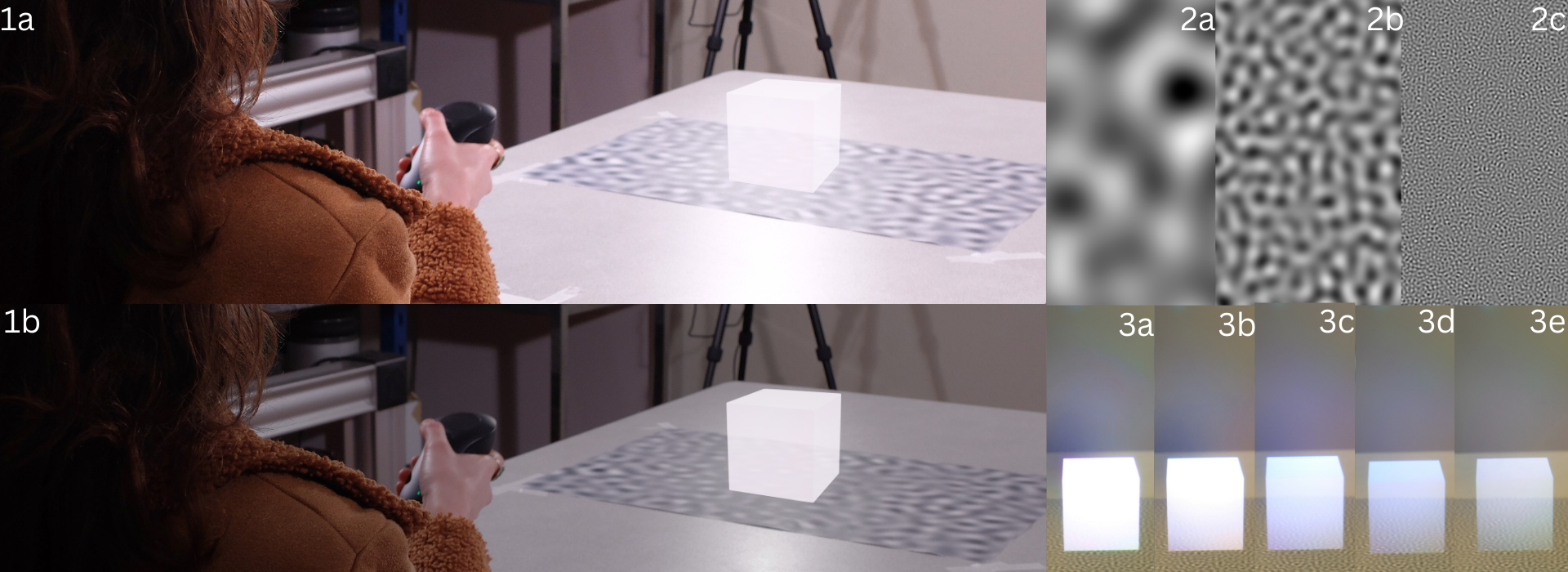
(2026). How Opacity and Background Affect Surface Contact Perception in Optical See-Through AR. IEEE TVCG.

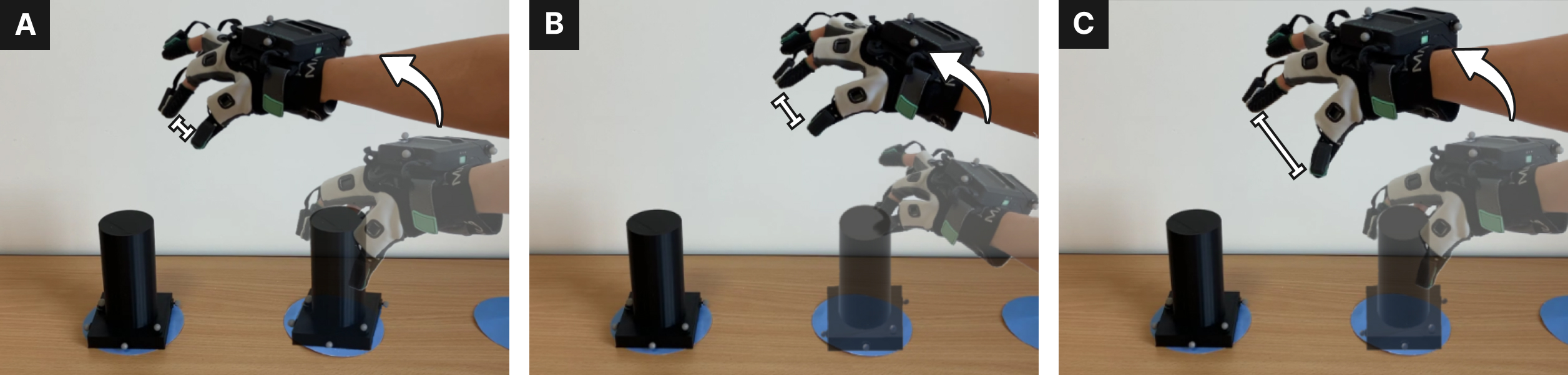
(2026). Interacting with Two Dominant Hands in AR: A Study of Aimed Motions with Real and Spatially Displaced Virtual Hands. ACM SUI 2026.

Project

(2026). Investigating Self-Body Perception and its Effect on Affordance in Augmented Reality. ACM TAP.

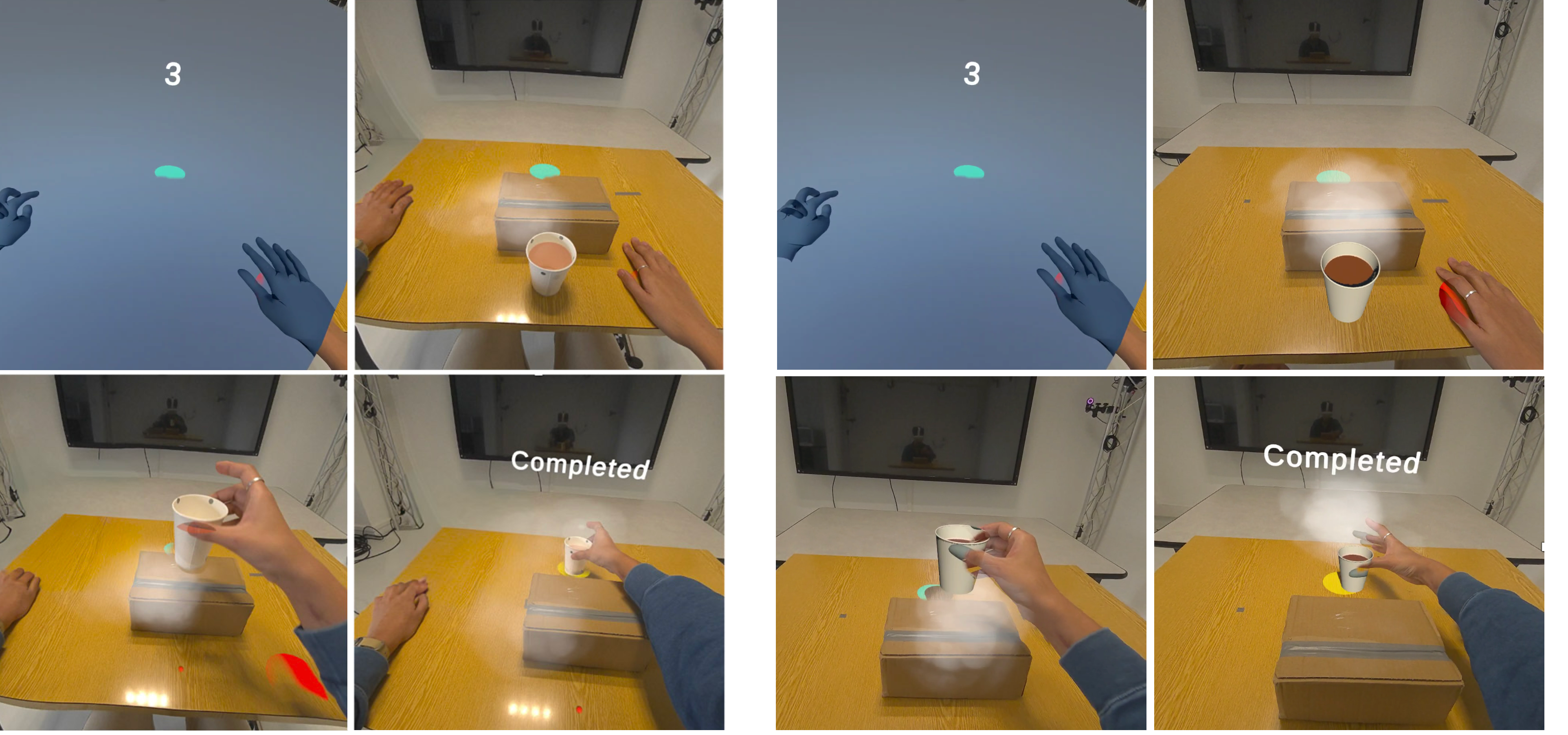
(2026). Modulating Perceived Affordances in Augmented Reality Through Object Physicality and Thermal Appearance. IEEE TVCG.

Project

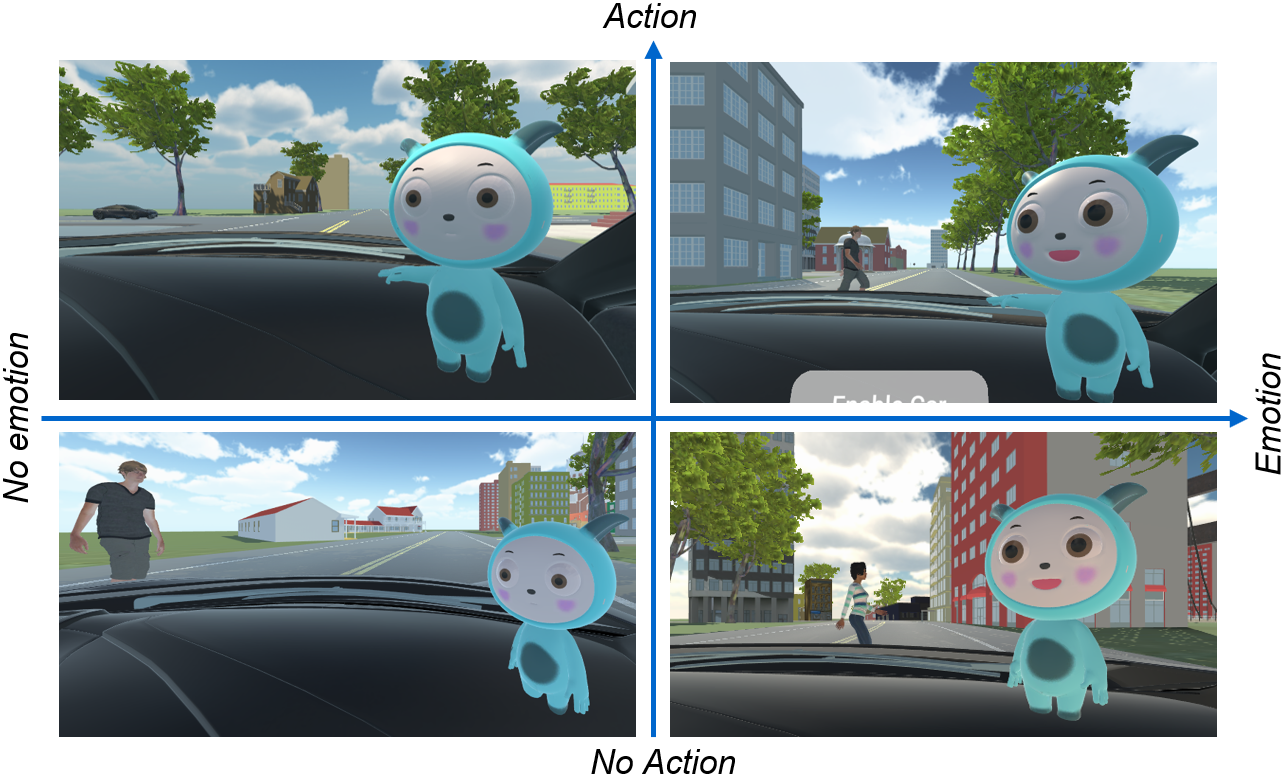
(2026). The Influence of Virtual Character Actions and Emotional Expressions on Trust in Autonomous Vehicles. Virtual Reality.

Project

(2026). The Nocturnity Scale: Measuring the Sense of Being at Night in Virtual Urban Environments. ACM SAP 2026.

(2025). Embodied Interaction and Habituation in Virtual Reality: A Digital Anthropological Inquiry. 11ICSSM 2025.

(2025). Examining the Impact of AR Weather Customization on Trust in Autonomous Vehicles. IEEE ISMAR-Adjunct 2025.

Project

(2025). Exploration du modèle MUCAS basé sur les Boids de Reynolds pour l'obtention de différents comportements collectifs. JFSMA 2025.

Project

(2025). Hands Off, Avatars On: Towards a Modular Approach for Real-Time Body Modification in AR. IEEE ISMAR-Adjunct 2025.

Project

(2025). Impact of Adding, Removing and Modifying Driving and Non-Driving Related Information on Trust in Autonomous Vehicles. IEEE VRW 2025.

Project

(2025). The 2nd Workshop on Seamless Reality: AR Technologies for Seamless Perception and Cognition between Cyber and Physical Spaces. IEEE VRW 2025.

(2025). Towards Augmented Reality Support for Swarm Monitoring: Evaluating Visual Cues to Prevent Fragmentation. IEEE TVCG.

Project

(2025). Trust and Safety in Autonomous Vehicles: Evaluating Contextual Visualizations for Highlighting, Prediction, and Anchoring. ICAT-EGVE 2025.

Project

(2025). Visualisations des mécanismes micro pour appréhender la complexité des systèmes distribués auto-organisés.

Project

(2024). Human perception of swarm fragmentation. ACM/IEEE international conference on human-robot interaction (HRI’24).

Cite Project

(2024). Investigating Whether the Mass of a Tool Replica Influences Virtual Training Learning Outcomes.

Cite Project

(2023). How to Grasp the Complexity of Self-Organised Robot Swarms?. FRCCS 2023: French Regional Conference on Complex Systems.

Cite Project DOI URL

(2023). A unifying method-based classification of robot swarm spatial self-organisation behaviours.

Cite Project

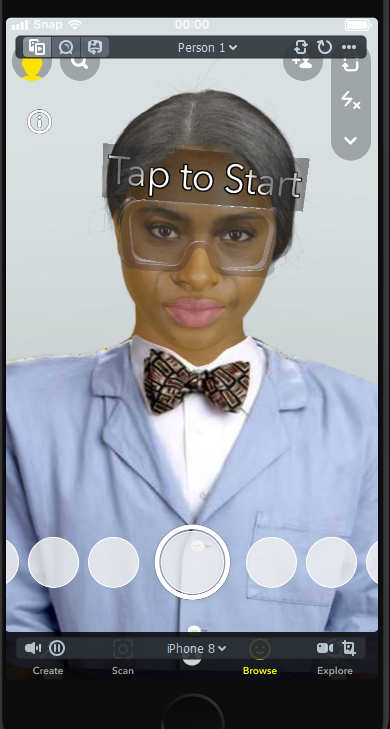
(2021). Mirror, mirror on my phone: Investigating dimensions of self-face perception induced by augmented reality filters. Proceedings - 2021 IEEE International Symposium on Mixed and Augmented Reality, ISMAR 2021.

Cite DOI

(2020). Influence of virtual objects' shadows and lighting coherence on distance perception in optical see-through augmented reality. Journal of the Society for Information Display.

Cite Project DOI URL

(2020). Can Retinal Projection Displays Improve Spatial Perception in Augmented Reality?. Proceedings - 2020 IEEE International Symposium on Mixed and Augmented Reality, ISMAR 2020.

Cite Project DOI

(2020). Using Identification with AR Face Filters to Predict Explicit & Implicit Gender Bias. Proceedings - 2023 IEEE International Symposium on Mixed and Augmented Reality (ISMAR).

Cite Project DOI

(2019). Virtual Objects Look Farther on the Sides : The Anisotropy of Distance Perception in Virtual Reality. IEEE Virtual Reality Conference.

Cite Project Video DOI URL

(2019). Pyramid escape: Design of novel passive haptics interactions for an immersive and modular scenario. 26th IEEE Conference on Virtual Reality and 3D User Interfaces, VR 2019 - Proceedings.

PDF Cite Video DOI

(2019). Studying exocentric distance perception in optical see-through augmented reality. Proceedings - 2019 IEEE International Symposium on Mixed and Augmented Reality, ISMAR 2019.

Cite Project DOI

Contact